The Secession Is a Provocation, Not a Decoration
The Secession building was designed to be illegible to the generation it was rebelling against — the facade, the dome and the basement form a single polemical statement, and the motto above the door was a fight, not a slogan.
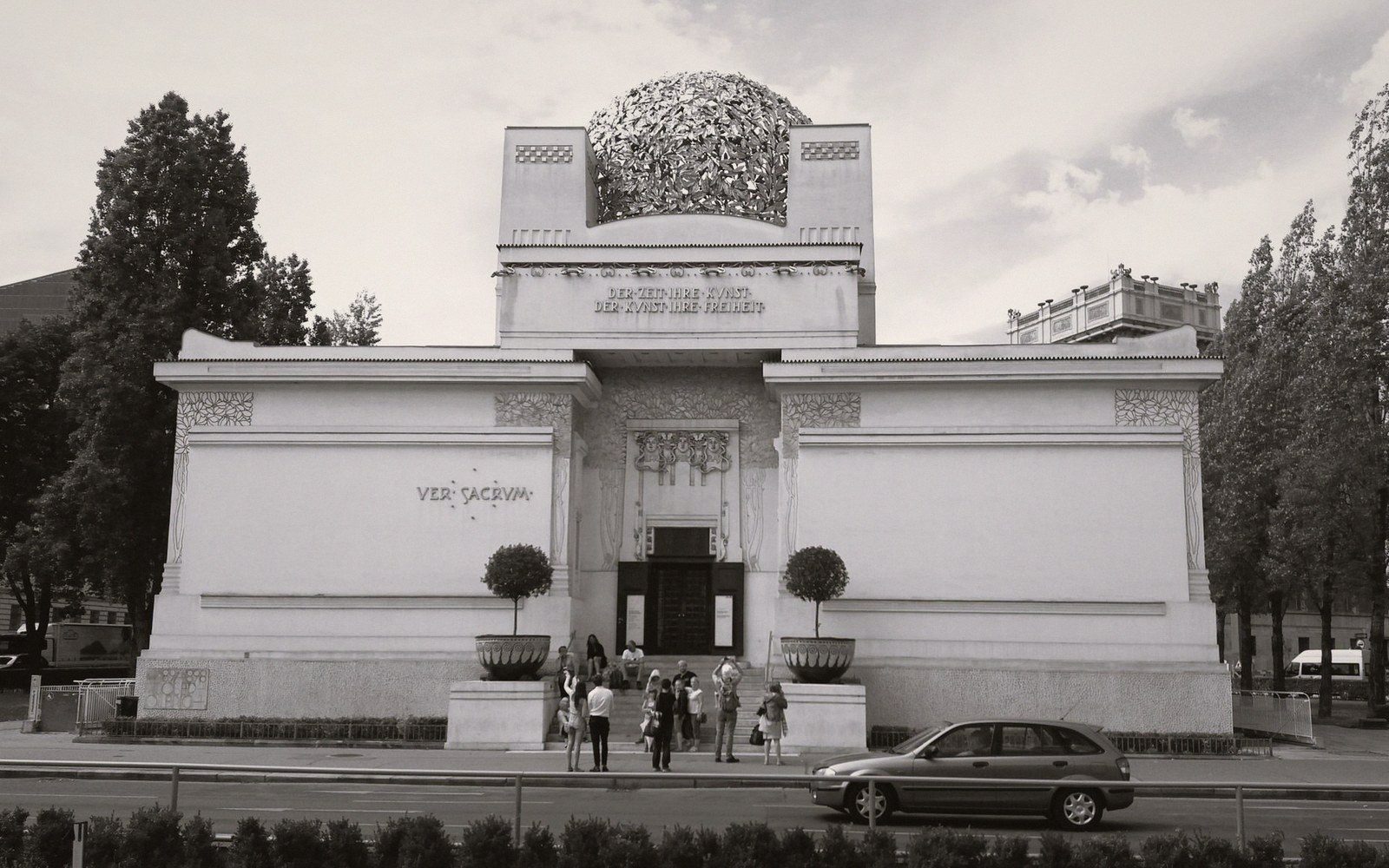
A Building That Said No
When Joseph Maria Olbrich completed the Secession building in 1898, Vienna's cultural establishment had a ready insult: Krauthappel, the cabbage head. The gilded dome of interlocking laurel leaves over a stark white cube struck traditionalists as absurd — showy and anti-architectural at once. This was not an accidental provocation. The building was designed to be unreadable to the people it was fighting.
The context matters. The Künstlerhaus, Vienna's dominant exhibiting institution, ran on seniority, academic convention, and the tastes of men who had built careers during the Ringstraße years — that great imperial project of historicist facades in which every public building dressed itself in the costume of a prior civilisation. When Gustav Klimt, Koloman Moser, Josef Hoffmann and the others resigned to form the Vienna Secession in 1897, they needed a building that embodied the rupture. Olbrich, twenty-nine years old and only recently returned from studying with Otto Wagner, gave them one.
The cube announces its refusal immediately. The facade carries almost no applied ornament of the kind that lined every boulevard in the inner city. What decoration exists is structural to the argument: three Gorgon heads above the entrance — Medusa facing forward, her sisters in profile — and sinuous owl-winged figures that owe nothing to classical revival conventions. These are not ornaments borrowed from a historical style; they belong to a visual language being invented in the moment. Koloman Moser is thought to have designed them. They mark the threshold as genuinely different territory.
The Motto Is Not Welcoming
The inscription across the entrance reads: Der Zeit ihre Kunst, der Kunst ihre Freiheit — to every age its art, to art its freedom. It is easy to receive this as a high-minded aspiration, the kind of thing institutions say when they want to sound bold. Read it in 1898, in context, and it is a declaration of war.
The first clause — to every age its art — directly repudiates the Ringstraße programme, which held that the forms of ancient Greece, Renaissance Florence and Gothic France were permanently available for reuse. The Secessionists argued the opposite: a genuine culture produces forms specific to its own time. Any other approach is theatrical, nostalgic and, finally, dishonest. The second clause — to art its freedom — was pointed at the Künstlerhaus jury system, which controlled what was exhibited and therefore what was validated as art in Vienna.
The motto is not above the door by accident. You read it as you enter. You accept the terms of the argument before you step inside.
What the Basement Changes
The building reads differently once you know what is kept in its basement. Klimt's Beethoven Frieze — painted for the Fourteenth Secession Exhibition in 1902, never meant to be permanent — was removed, passed through private hands, and now rests in the sub-level of this same building. The frieze was made for a single occasion, for a space designed around it, and it carries all the visual weight of the movement's ambitions: the suffering body, the ideal, the embrace that closes the knight's quest. That it ended up underground in its own birthplace is not quite irony; it is the building absorbing the evidence of what it stood for.
The dome completes the argument. Cast from four tonnes of gilded bronze laurel, it sits on a white box with a brutalism that is entirely deliberate. Laurel is the classical material of victory and consecration, but here it is deployed without any of the structural logic that classical architecture demands. It does not crown a pediment or surmount columns; it simply sits there, conspicuously itself. The cabbage-head mockery was responding to something real: the dome refuses the grammar of the buildings around it. That refusal is the point. Olbrich was not making a building that competed with the Ringstraße on its own terms. He was making a building that made those terms look exhausted.
The Secession is three blocks from the Naschmarkt and a short walk from the Ringstraße's stage-set boulevard. Stand on the pavement outside it and look at the dome. The generation that called it a cabbage head was paying it a better compliment than they knew.