The Ringstraße Was Built to Look Like Several Other Cities at Once
Franz Joseph's great boulevard is a deliberate fiction — one that stages European history rather than belonging to it.
A Boulevard of Borrowed Styles
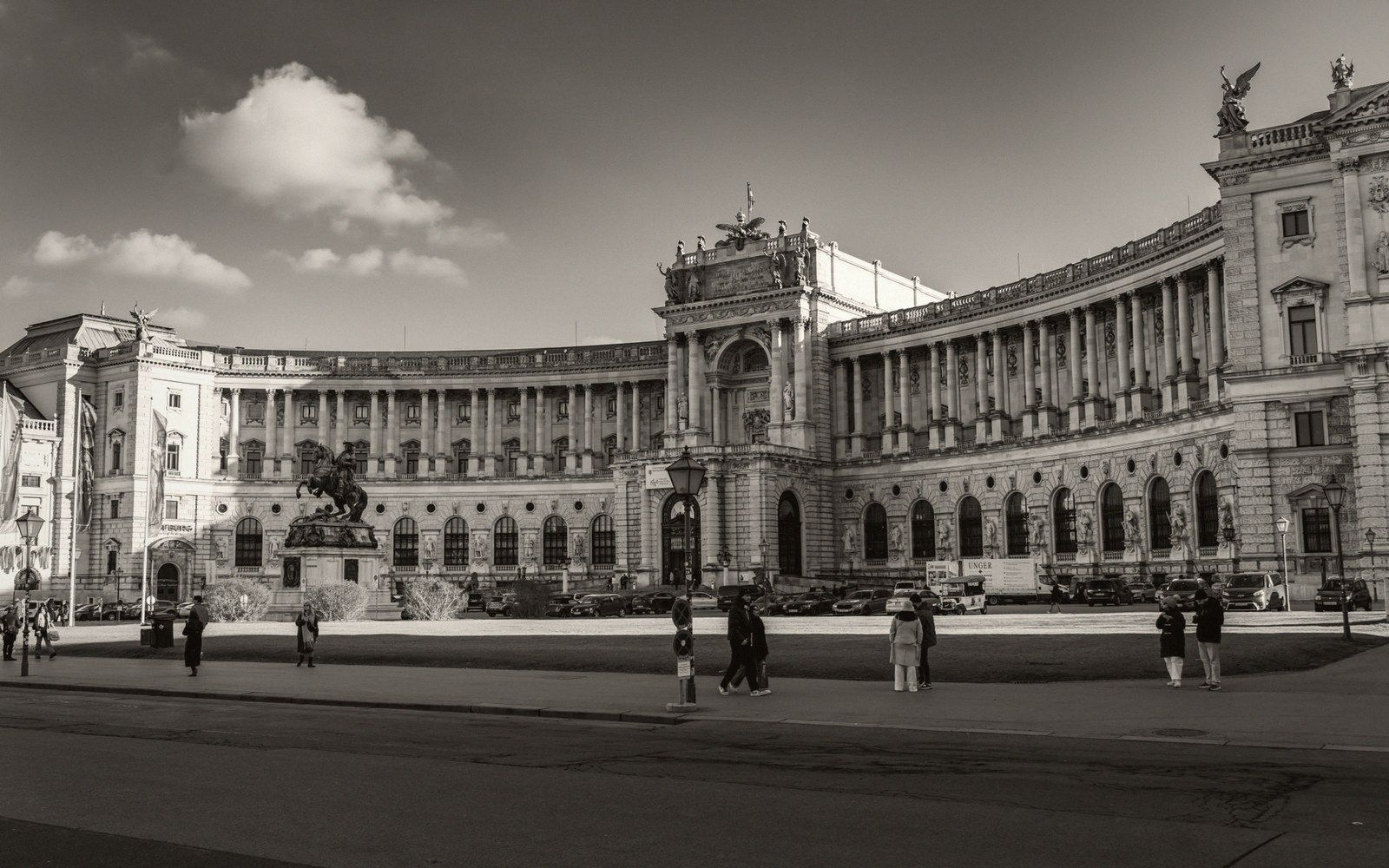
When Franz Joseph ordered the demolition of Vienna's medieval city walls in 1857, he did not simply make room for a new road. He commissioned an argument. The Ringstraße — the broad ceremonial boulevard that rings the old inner city — was built institution by institution through the second half of the nineteenth century, and each building was assigned its own historical costume. The parliament received Greek classical columns, on the theory that democracy was an Athenian invention. The city hall got Gothic spires, linking municipal self-government to the great free cities of the medieval north. The Burgtheater and the two great museums — now the Kunsthistorisches Museum and its mirror building, the Naturhistorisches Museum — arrived in Renaissance dress, the style associated with humanist learning and courtly magnificence.
None of these buildings are what they quote. The parliament is not Athenian; the Rathaus is not Flemish; the museums are not Florentine. They are Viennese buildings wearing historical metaphors as architecture. The whole boulevard functions less like a city that grew and more like a sentence that was composed — each word chosen for what it means rather than what it is.
What That Means for Walking It
This matters to anyone trying to read the street. The Ringstraße can feel vaguely unsettling without knowing why: something is slightly off about the scale, the spacing, the way no building looks as though it belongs to its neighbour. That strangeness is not a failure. It is the point. Franz Joseph and his planners wanted Vienna to appear as the heir of all European civilisation simultaneously — Greek, Gothic, Renaissance, Baroque — and the only way to do that was theatrical. The Ringstraße is a stage set that became a city.
Walking it today, the theatricality rewards attention more than it repays reverence. Look at how the pediments and towers have been blown up to a scale that the original styles never used. Look at the symmetry imposed on buildings that in their original contexts were never symmetrical. The historicism is not dishonest, exactly — it knows what it is doing. It is a nineteenth-century empire telling itself a story about where it came from, in stone and stucco, stretched across more than five kilometres of former glacis. That story was always more wishful than true, which is precisely what makes it worth reading.