Schiele's Line Is an Argument, Not a Style
The angularity is deliberate, the rawness is deliberate, and both are a position taken against everything his teachers stood for.
The Academy and What He Left Behind
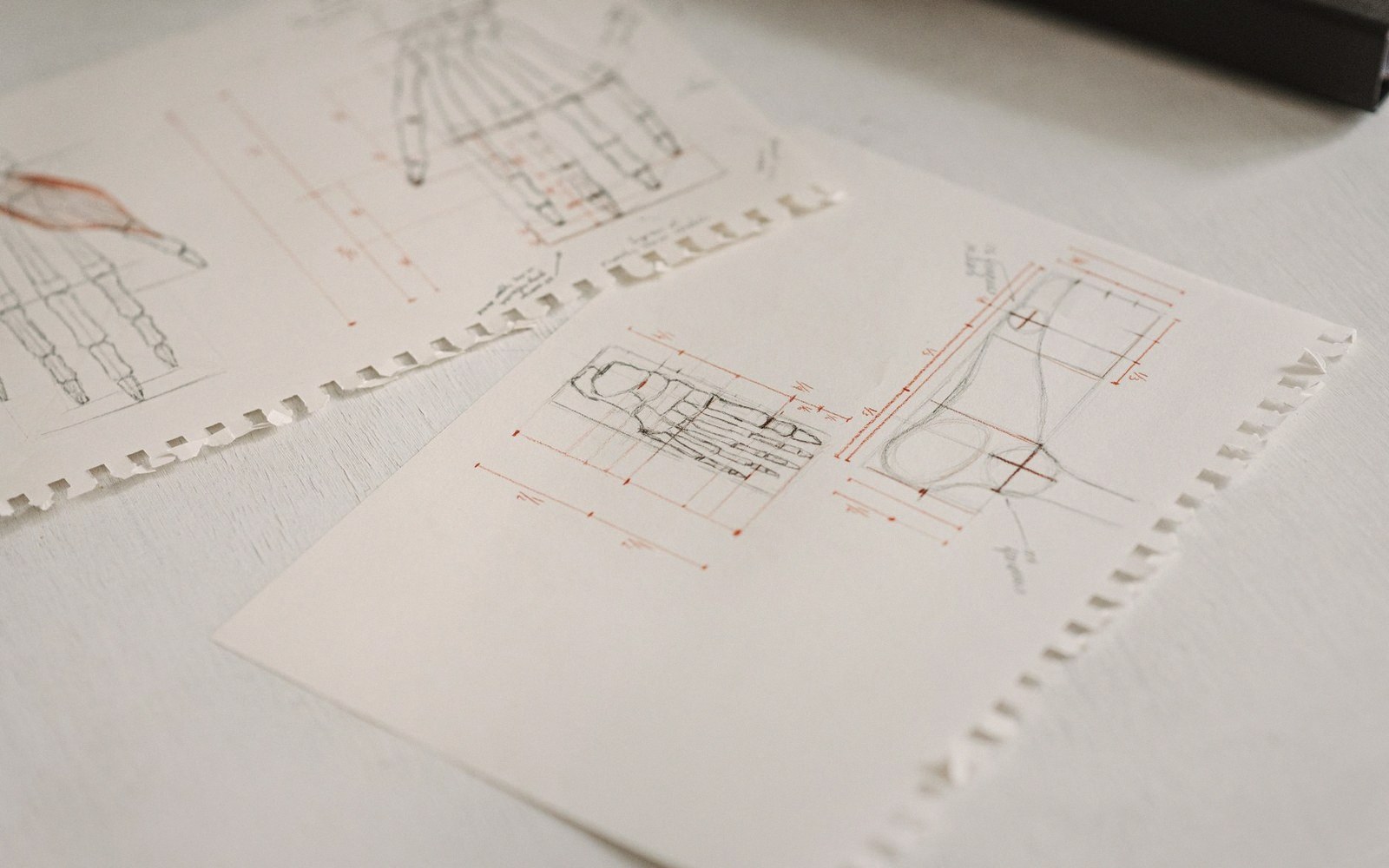
Egon Schiele entered the Vienna Academy of Fine Arts in 1906, aged sixteen, already technically proficient in ways that impressed his professors. The academic tradition he entered was built on a specific ideal of the contour line: smoothly graduated, subordinated to volume, designed to make the boundary between figure and ground seem inevitable and serene. Line existed, in this system, to complete form — to close it off from the world, to reassure the eye. Schiele mastered this and then, within a few years, dismantled it with intent.
What replaced it is not expressionist looseness, which is the usual shorthand. Schiele's mature line is tightly controlled and highly conscious — the opposite of abandoned. What changed was its purpose. Rather than confirming where the body ends, his contour interrogates that boundary. The line does not close; it probes. Limbs terminate in angular abruptness. Joints — knees, elbows, wrists — are emphasized until they become almost diagrammatic, as though the skeleton were asserting itself through the skin rather than being smoothed over by it.
Three Works, Three Stages
Self-Portrait with Physalis (1912) is a useful place to start, partly because the physalis — the orange Chinese lantern plant — is the most conventional element in the picture. Its softly rendered spheres sit in direct contrast to the hand holding it, which is drawn as though carved: fingers bent at improbable angles, the skin appearing taut over bone, the contour applied with a pressure that seems almost aggressive. This is not how hands look. It is how hands feel when they are thought about, when the ordinary comfort of rendering is refused. The line is making a claim about bodily experience rather than visual appearance.
Compare this to the earlier Gerti Schiele (1909), a portrait of his sister drawn while he was still in transition. The influence of his training shows in the more settled treatment of the face — a smoother transition through the cheek, a more conventional use of tone. But even here the hands and arms already start to stiffen, the elbows suggesting angles that academic figuration would have softened. Schiele is already in argument with his own technique, and the picture carries the evidence of that argument rather than resolving it.
By the time of The Family (1918), completed in the final year of his life and left technically unfinished, the line has become something else again. It is more somber, the angularity less confrontational than monumental. The figures — a man, a woman, a child placed between them — are rendered with a gravity that the earlier work's nervous energy did not require. The contour here is still Schiele's: deliberate, unblended at the joints, refusing the soft academic ideal. But it no longer feels like a provocation. It feels like an acknowledgment that the body exists in time and will eventually fail. The argument has not been abandoned; it has deepened.
What the Line Refuses
Understanding Schiele's line requires knowing what it is declining to do. Academic training taught the sfumato-adjacent softening of contours to produce an illusion of three-dimensional mass; the body was rendered as a volume that the line merely indicated. Schiele refuses the illusion of volume in exactly the places where the body is most structurally itself: at joints, at the edges of fingers, at the angles of a bent elbow. He also refuses tonal flattery. His figures are pale to the point of transparency in some areas, ruddy and almost raw in others, with no attempt to smooth the transitions into anything attractive. The line says: this is what a body is, not what it looks like under ideal conditions.
That refusal is an aesthetic argument with ethical weight. Schiele was working during the years when Vienna's cultural establishment — represented in the Secession building's very DNA — was still in the middle of its own rupture with academic decorum. His line participates in that rupture but on its own terms, narrower and more personal, focused on the single figure rather than ornament or allegory. The best place to stand before these works in Vienna is the Leopold Museum, which holds the largest concentration of his drawings and paintings in the world. Stand close. The line is not large. It does not need to be.