The Kunsthistorisches Is Not a Museum of Art History
The name is a red herring. The Kunsthistorisches Museum is not an illustrated lecture on the history of art — it is the autobiography of a dynasty.
What You Are Actually Walking Into
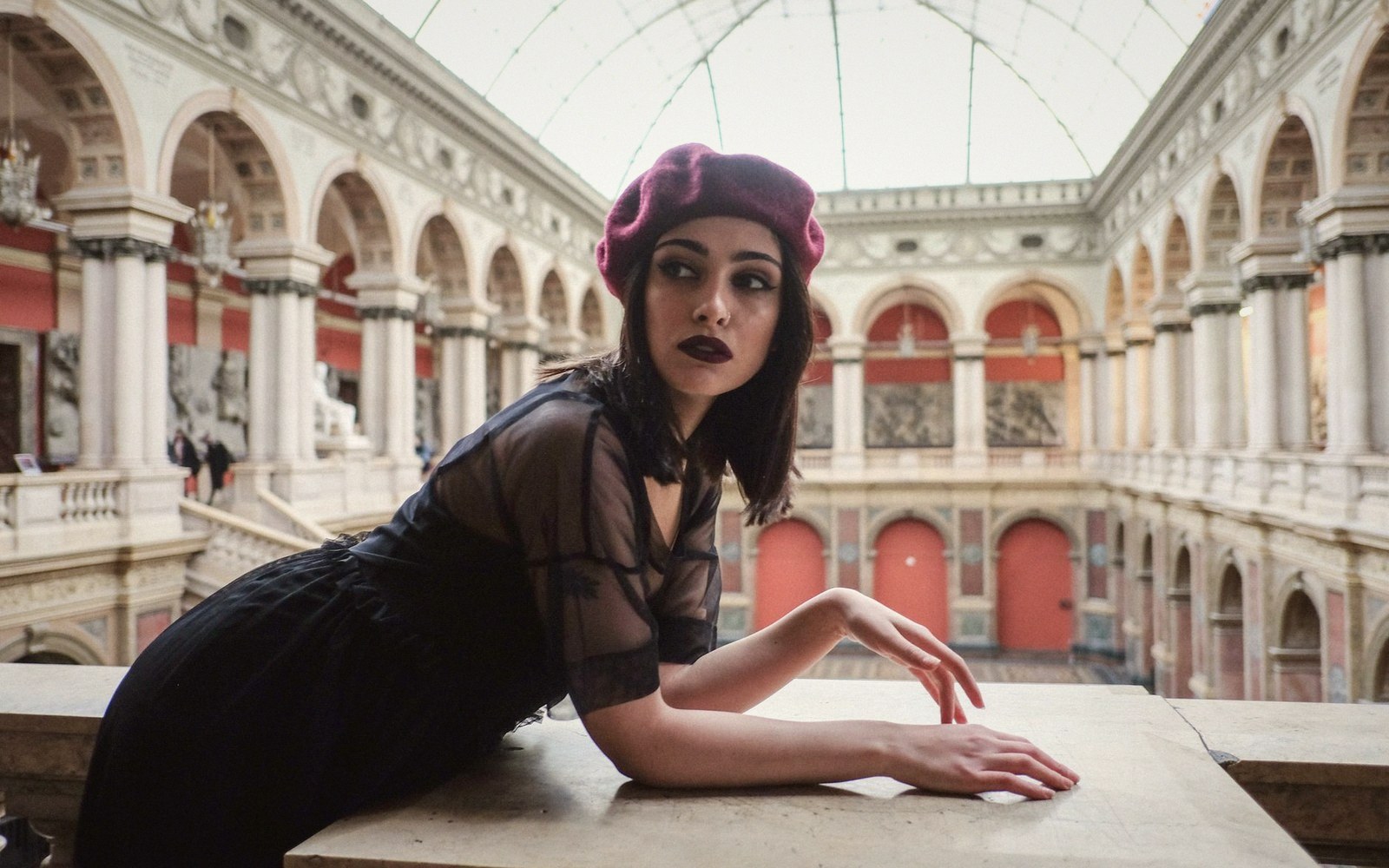
The building itself announces something about ambition. Franz Joseph opened the Kunsthistorisches Museum in 1891 as a palace for objects that had, for centuries, been distributed across Habsburg residences, treasuries and studioli — the small private rooms where Renaissance princes kept their most intimate possessions. The Ringstraße exterior, with its paired art-historical monument facing the Natural History Museum across Maria-Theresien-Platz, was designed to look permanent and inevitable. The interiors — marble staircases, painted lunettes by Hans Makart and a young Gustav Klimt, gilded coffered ceilings — were designed to look imperial. Neither quality is incidental. The building tells you, before you have seen a single object, that this collection belongs to a story about power.
That story is the Habsburgs. Not art history in the abstract, but one family's four centuries of accumulating, commissioning, trading, inheriting and occasionally stealing the things they found beautiful, useful or symbolically charged. What makes the KHM unusual among Europe's great museums is how intact that original logic still is. The Louvre's collection was formed partly by royal accumulation and partly by revolutionary expropriation and Napoleonic plunder, then reorganised by a democratic republic. The British Museum was assembled on explicitly universal and scholarly principles from its founding in 1753. The Kunsthistorisches, by contrast, is still essentially what the Habsburgs left behind, rehoused and professionally curated but not philosophically reordered. You are walking through an argument that no one alive has made — but the argument is still legible.
Three Collections, One Claim
The picture gallery on the upper floor is the part most visitors go to. It contains what many consider the world's finest surviving collection of Pieter Bruegel the Elder — twelve or more panels, the largest single holding of his surviving paintings, gathered in one place because Rudolf II and his forebears wanted them. Bruegel appeals to a dynasty that governed the Low Countries: the paintings carry specific Flemish landscapes, specific local types, specific weather. To the Habsburgs, collecting Bruegel was partly a statement of cultural ownership over territory they actually ruled.
The same logic applies to the extraordinary density of Venetian painting in the gallery — Titian's portraits of Charles V and of his court physician are here not because a later curator thought Titian representative of the High Renaissance, but because Titian was the painter Charles V preferred and used. The relationship was personal before it became canonical. Similarly, the Velázquez portraits of the Spanish infanta Margarita Teresa, sent from Madrid to Vienna as evidence to a prospective bridegroom that she was growing up as promised, arrived as diplomatic instruments. That they are now among the most luminous things in the museum is a consequence of quality, not of curation. Nobody selected them for a survey of seventeenth-century Spanish painting; they were selected because they were pictures of a child who was going to marry an emperor.
Downstairs — and many visitors never make it — the Kunstkammer is the collection that most faithfully preserves the dynastic rationale. The word means, literally, a chamber of art, and more precisely a chamber of wonders: the Renaissance and Baroque tradition of assembling extraordinary objects not by category but by the quality of astonishment they could induce. A carved nautilus shell sits near an automaton clock sits near a rock-crystal vessel sits near a gold salt cellar attributed to Benvenuto Cellini — the Saliera, widely considered the most important piece of Renaissance goldsmithery in existence. What connects these objects is not medium, period or subject matter. What connects them is that they were made with the highest possible skill and they were meant to demonstrate, to anyone who saw them in the original Kunstkammer at Prague under Rudolf II, that their owner commanded the full range of human ingenuity.
That is an imperial claim, not an art-historical one. Rudolf collected alchemists as well as artists, astronomers as well as goldsmiths, because what he wanted to gather into one space was the totality of knowledge and craft as his age understood it. The Kunsthistorisches Kunstkammer is the largest surviving collection of Renaissance Kunstkammer objects in the world, and walking through it with that in mind — resisting the impulse to see it as a decorative arts survey — changes what you are looking at. These are trophies of a worldview, not specimens in a taxonomy.
The Egyptian and Near Eastern collection on the ground floor is easier to misread as a neutral antiquarian enterprise, and in some ways it is more complicated. Parts of it were gathered through nineteenth-century excavation and the acquisitions that followed — a more scholarly, less purely dynastic mode of collecting, though still operating within networks of imperial access. But some of the ancient Egyptian objects arrived much earlier, as curiosities folded into the same Kunstkammer tradition: things remarkable for their age, their strangeness, their distance from Europe. The shift in collecting logic between a sixteenth-century rarity and a nineteenth-century archaeological find is real, and the current displays navigate it honestly. What holds across the Egyptian, Greek, and Etruscan holdings is the simple fact of scale and quality: the collection is large enough and fine enough that it would anchor a major museum in any other European city. In Vienna it is a floor below the Brueghels.
How to Correct for the Name
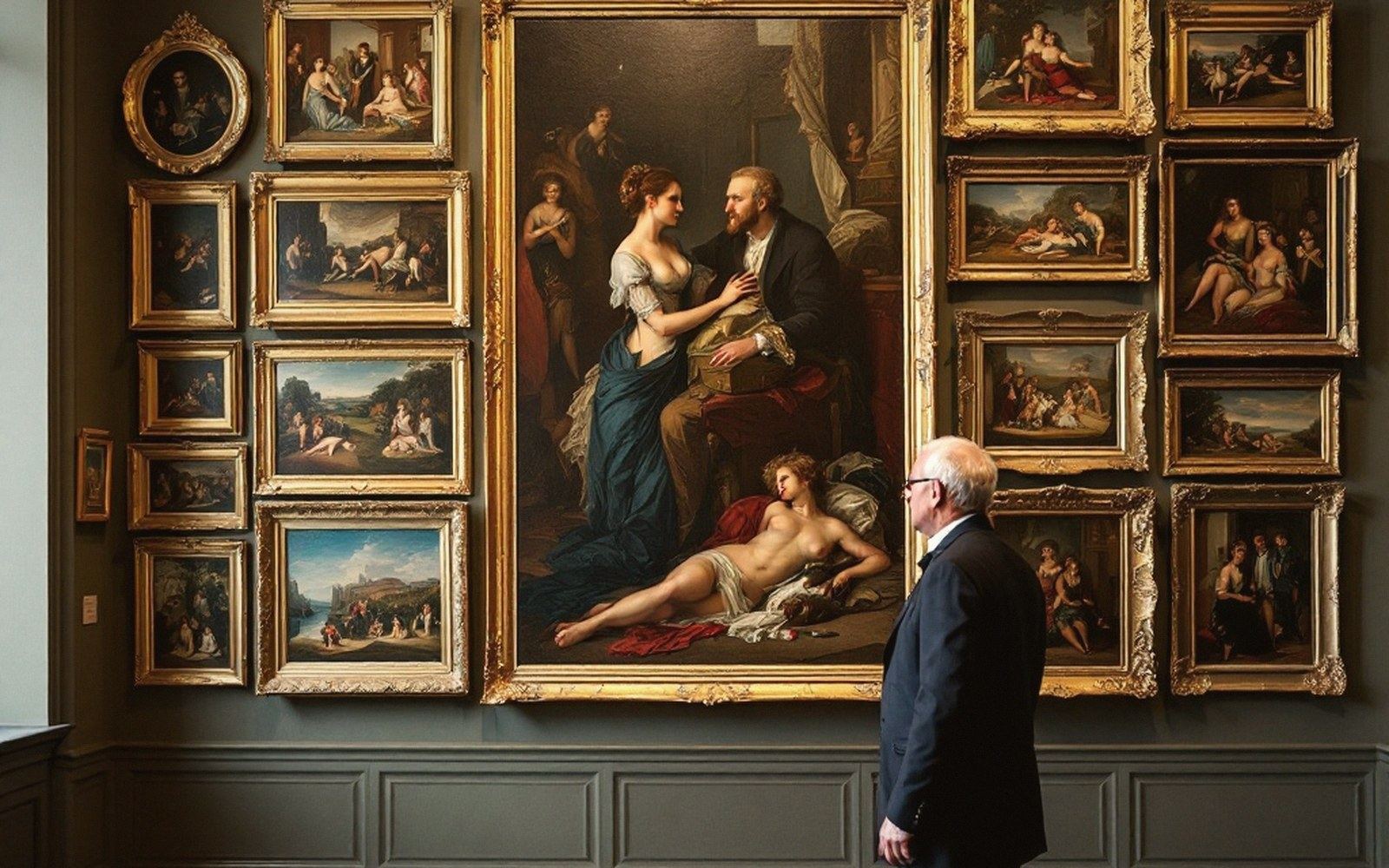
The name Kunsthistorisches — art-historical — was applied in 1891 when art history as an academic discipline was asserting itself in exactly this city, in the university across the Ring. Vienna was then the world capital of Kunstwissenschaft, the science of art: Alois Riegl, Franz Wickhoff and their colleagues were reforming how the field thought about periodisation, formal analysis and the relationship between objects and their historical moment. It would have been natural, and perhaps politic, to name the new imperial museum after the discipline that was making Vienna intellectually prestigious. But the collection inside did not change to match the name. It was not reorganised as a chronological survey or disciplinary demonstration. It remained — and remains — a dynastic accumulation given a public building.
Understanding this liberates you from the anxiety of coverage. You do not need to walk the galleries in order, absorbing art history from ancient Egypt through to the Baroque, to have done the KHM properly. You can spend an hour with Bruegel and understand more about how one extraordinary painter thought about landscape, work and the turning of the year than any survey approach would give you. You can sit in front of the Saliera and think about what it meant to own the most accomplished object of its kind in Europe, and what it costs to make something that no utilitarian argument can justify — a gold and enamel salt cellar for a king who already had everything. That is not art history. That is something older: the human need to make the finest possible thing, and the human appetite to possess it.
The Kunsthistorisches will reward a visitor who asks not "what does this represent in the history of art?" but "why did someone want this badly enough to have it made, or bought, or carried across a continent?" The answer to that question, repeated across two hundred rooms, is not a taxonomy. It is a portrait — detailed, partial, sometimes troubling, occasionally sublime — of a family that ruled half of Europe and wanted the other half to know it.