What the Albertina Keeps in the Dark
The collection you cannot see all at once is the one worth understanding
The Albertina holds one of the largest and finest collections of works on paper in the world — around a million and a half items, including drawings, watercolours, prints, and photographs. Almost none of it is on view at any given moment. This is not neglect. It is physics.
Paper is among the most light-sensitive materials a collection can hold. Ultraviolet radiation breaks the chemical bonds in organic pigments; even low-level visible light, sustained over weeks, bleaches a wash, fades a chalk line, shifts the warm ivory of laid paper toward grey. The Albertina's drawings by Dürer, Raphael, Rembrandt, Rubens, Schiele, and Klimt spend the vast majority of their existence in climate-controlled, near-dark storage — not because they are being withheld, but because display is, for a drawing, a slow act of destruction. Institutions that care about their holdings ration the light they permit.
What this means in practice is that the Albertina is two collections simultaneously. One is the rotating, thematically organised sequence of works in the galleries — always changing, always partial, always dependent on when you visit. The other is the permanent collection in the sense a painting museum uses that phrase: a fixed body of work you can reliably expect to encounter. At the Albertina, no such expectation holds. The Dürer hare — one of the most reproduced drawings in Western art — may or may not be on view. If it is, it will be for a limited period, then rested.
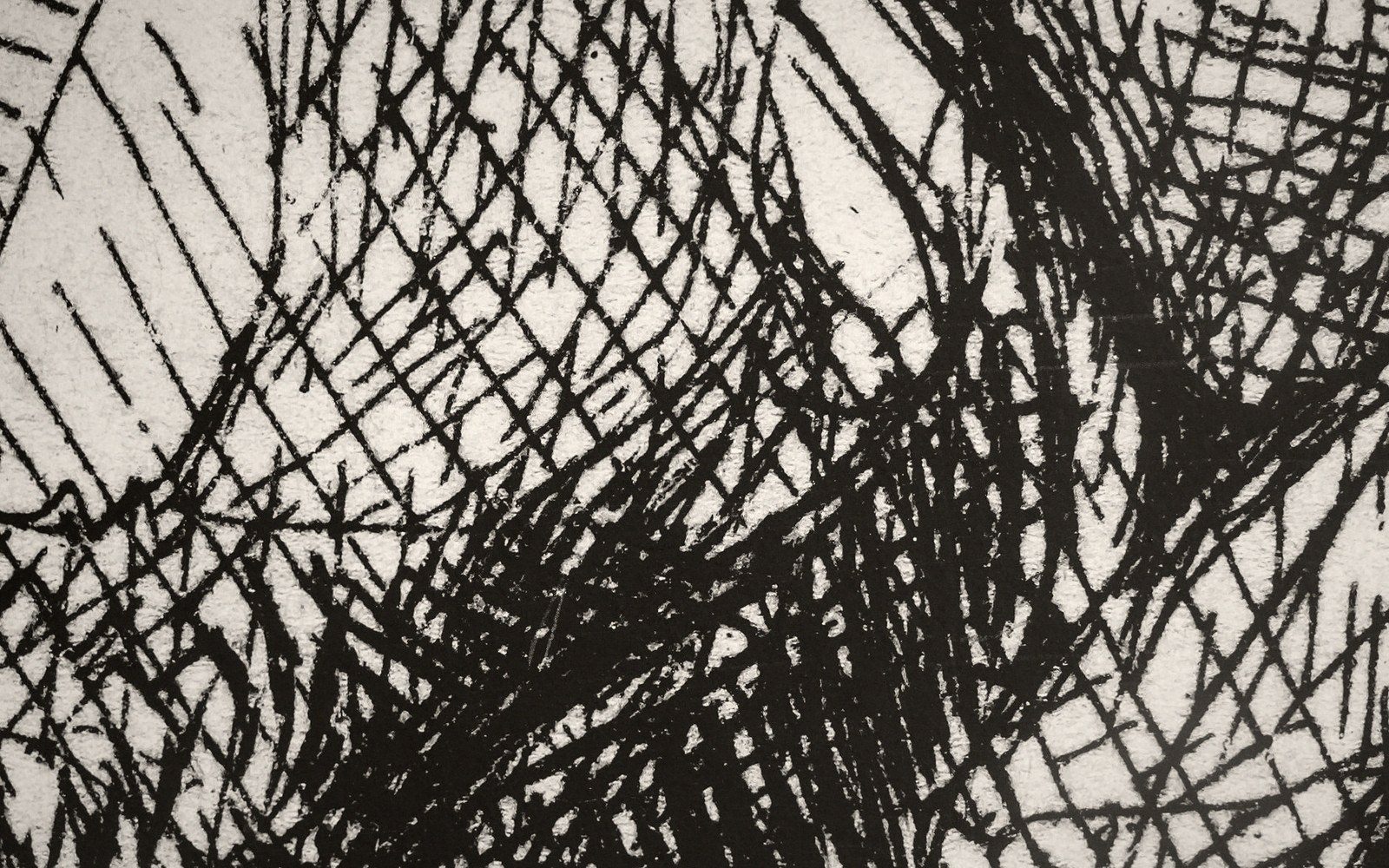
This is worth sitting with, because it changes how you look. When a drawing is in front of you, knowing it will shortly go back into the dark, the encounter carries a different weight. Reproductions — however good — flatten the experience in ways that matter. A drawing is a record of a physical act: the pressure variation in a Rembrandt pen line, the way red chalk crumbles at the edge of a stroke, the precise texture of the paper pushing back against a silverpoint. None of that survives scanning. The scale is wrong, the surface is gone, and the slight topography of the sheet — which is real and visible — becomes invisible. Seeing a drawing in person is not a more intense version of looking at a reproduction; it is a different kind of looking entirely.
The Albertina was assembled in the late eighteenth century by Duke Albert of Saxe-Teschen, whose collecting was systematic and European in scope, amassing works across schools and centuries rather than around a single taste. The collection entered public life gradually over the nineteenth and twentieth centuries, and the institution now occupies the Habsburgs' former Albertina palace at the edge of the Burggarten. Its holdings in Old Master prints and drawings — particularly German Renaissance and Dutch Golden Age — are matched by almost no other institution outside the British Museum and the Louvre.
For a visitor, the practical implication is to arrive with research done. Know before you go which works are currently on display, accept that the answer changes constantly, and be prepared for the thing you most wanted to see to be resting in the dark. Then look very carefully at whatever is actually in front of you, because it earned its time in the light.