Two Buildings, One Argument
The Belvedere is one collection split across two palaces, and the split is not arbitrary: Klimt above, Baroque below, each shaped by its building.
The Palace You Walk Toward and the Palace You Walk Past
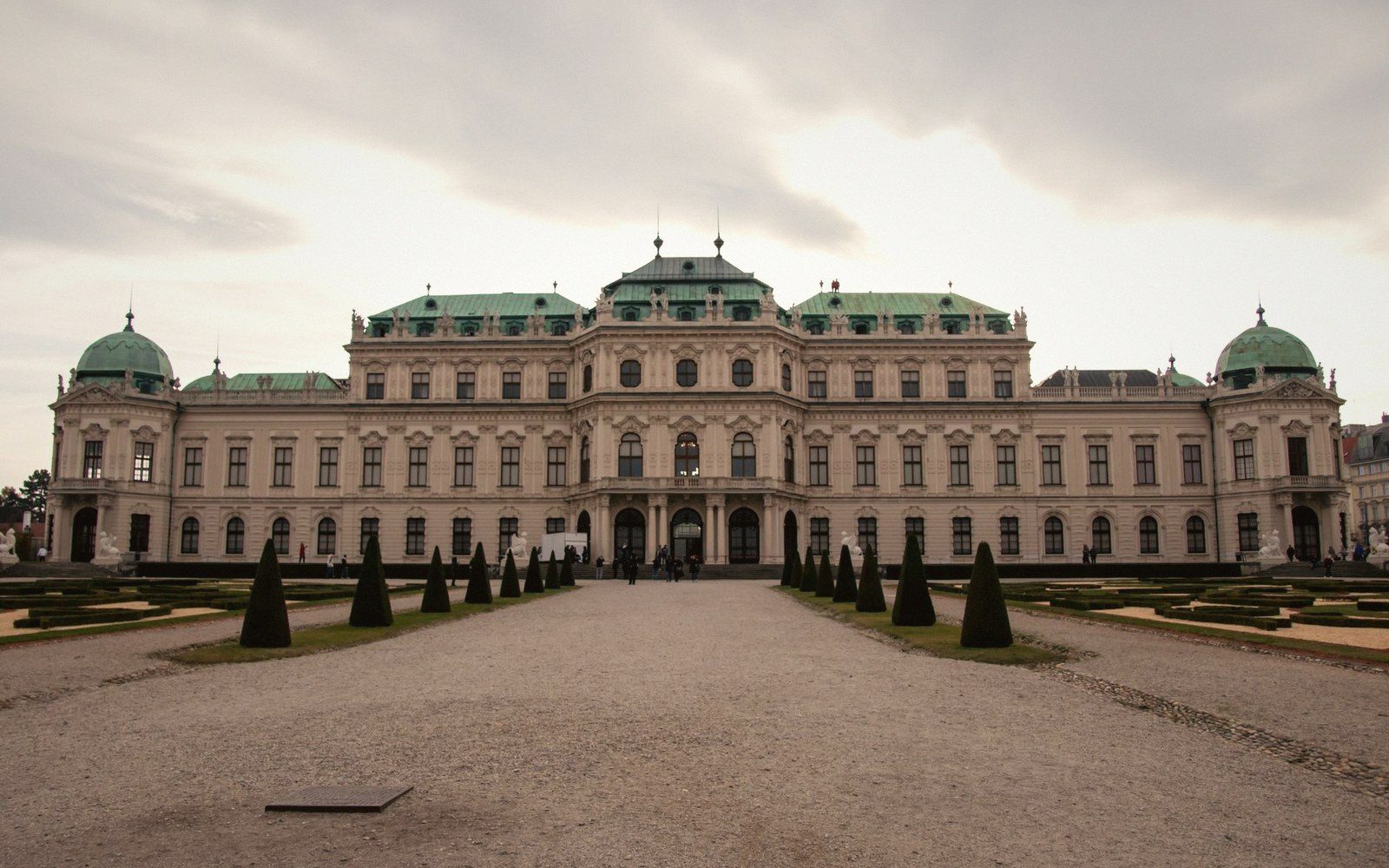
Every visitor to the Belvedere has the same instinct: aim for the larger building at the top of the hill. The Upper Belvedere sits above formal gardens and announces itself with the confidence of a structure built to impress. Johann Lukas von Hildebrandt completed it in 1723 as Prince Eugene of Savoy's summer palace, and it still reads as the destination. Which means most visitors reach the Lower Belvedere — completed a decade earlier, plainer in elevation, quieter in intention — only by accident, if at all. This is a mistake worth correcting, because the two buildings hold different things for reasons that shape how you read what is inside each.
The Upper Belvedere is where Vienna keeps its canonical image of itself: Klimt's gold-ground paintings, Schiele's late self-portraits, Kokoschka. The collection here is Austrian art from roughly 1780 to the mid-twentieth century, and its gravitational centre is the decade before the First World War — the moment when Vienna produced more consequential painting per square kilometre than almost anywhere else in Europe. The arrangement works because Biedermeier gives way to Historicism, Historicism to the Secession, the Secession to Expressionism, and the rooms hold enough space to let that argument breathe. The Kiss sits in a room that allows it to be seen from a distance and close up, which is exactly what the painting demands.
But the Upper Belvedere is not only the fin-de-siècle showcase it is marketed as. The earlier nineteenth-century holdings are here too, quietly, in rooms that visitors treat as corridors between Klimt and the exit. The Biedermeier portraits and landscapes deserve more than they get. So do the oil sketches, quick and unconstricted, where you can watch painters thinking in real time.
What the Lower Building Actually Holds
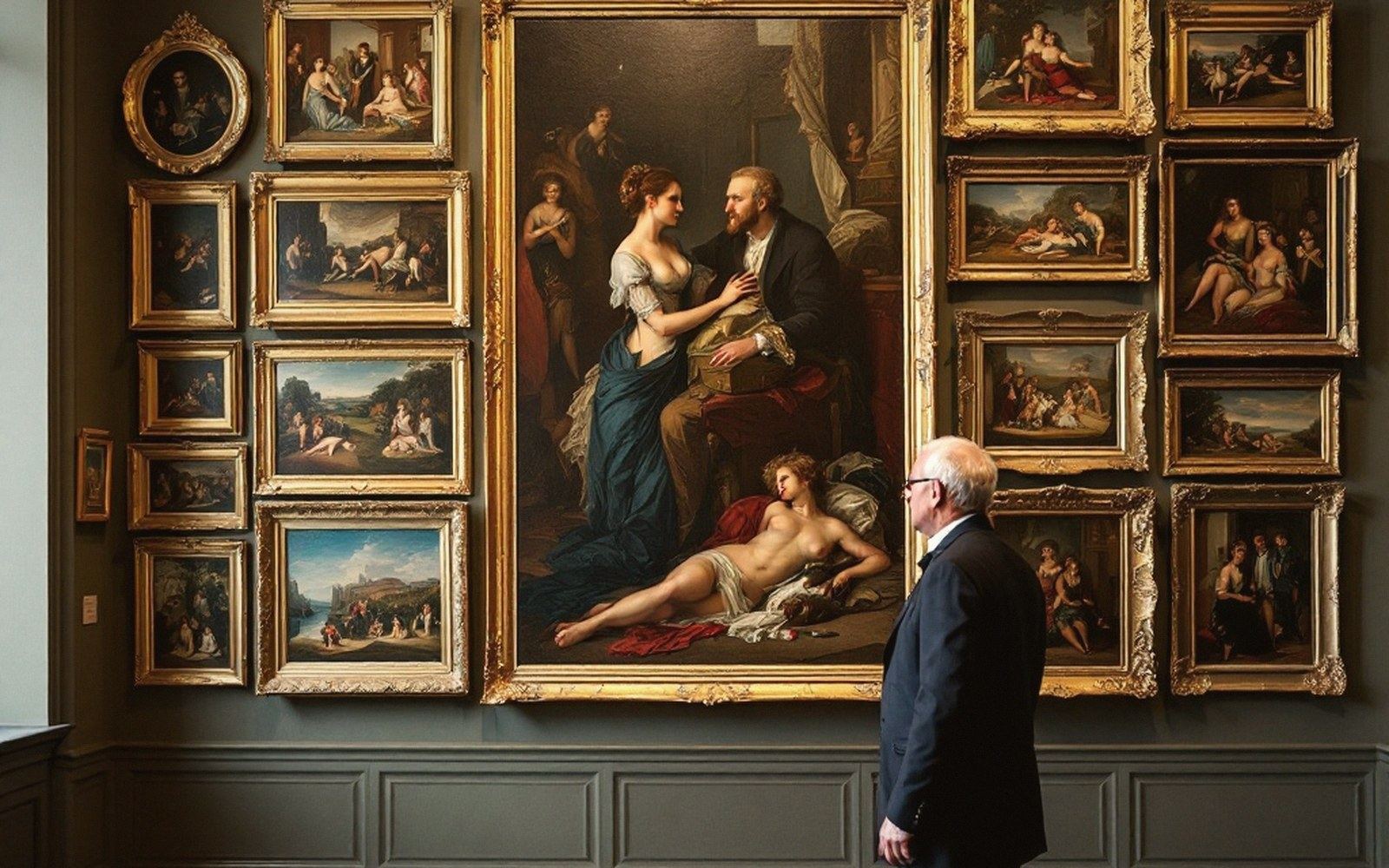
The Lower Belvedere began as Eugene's principal residence, a working palace rather than a place of display. That domestic human scale persists in the rooms now given over to the Baroque museum. The collection concentrates on Austrian and Central European Baroque painting and sculpture — the period from roughly 1680 to 1780 — and it is serious and undervisited in roughly equal measure. Franz Anton Maulbertsch is here in quantity: he was the most gifted fresco painter working in the Habsburg lands in the eighteenth century, and seeing his oil sketches in this building, a short distance from where some of the great Baroque interiors they prepared were eventually installed, is unexpectedly moving.
The Marble Hall and the Grotesque Rooms give the Lower Belvedere a decorative completeness the Upper cannot match. These are interiors that have not been turned into galleries — they remain spaces in which art and architecture make the same argument together. The gilding, the trompe l'œil ceilings, the niches built for specific sculptures: all of it survives intact enough to let you understand what the building was for before it became a museum.
Directly adjacent to the Lower Belvedere, the Orangery houses the museum of medieval art — and this is the space most visitors simply walk past. The entrance is unassuming, the signage does not shout, and the medieval collection lacks the promotional wattage of Klimt or Schiele. This is genuinely unfortunate. The carved and painted altarpieces assembled here represent a tradition of image-making that ran for centuries before the Renaissance arrived in the German-speaking lands, and several works by Rueland Frueauf the Elder and the Master of Klosterneuburg are of real quality. If you have an hour and have already spent time in the Upper Belvedere, the Orangery is the less-expected half of the same conversation.
Why the Split Matters for Looking
The argument the whole complex makes only becomes legible once you understand that neither building is the complete version. The Upper Belvedere shows you where Austrian art arrived; the Lower Belvedere and the Orangery show you where it came from. A morning that moves downhill — Baroque to medieval rather than straight for the modern — produces a very different sense of what the collection is.
There is also a provenance dimension worth holding in mind. The Belvedere's collection was not assembled neutrally: like every major Austrian holding, it passed through the years between 1938 and 1945 in ways that are still being worked through. The restitution of five Klimt paintings in 2006 — including Portrait of Adele Bloch-Bauer I — was the most visible consequence of that history, but it was not the last. Labels in the collection carry provenance notes, and reading them carefully is part of reading the collection honestly.
What the two palaces share, whatever floor you are standing on, is the conviction that collecting is an argument about value — about which periods matter, which artists define them, and which works survive to make the case. Eugene built the upper palace to impress foreign visitors and keep the lower one for actual life. The Belvedere as a museum has inherited both impulses, and the tension between them is still there in the hill between the two buildings, if you choose to walk it.