Scale Is Not Just Size
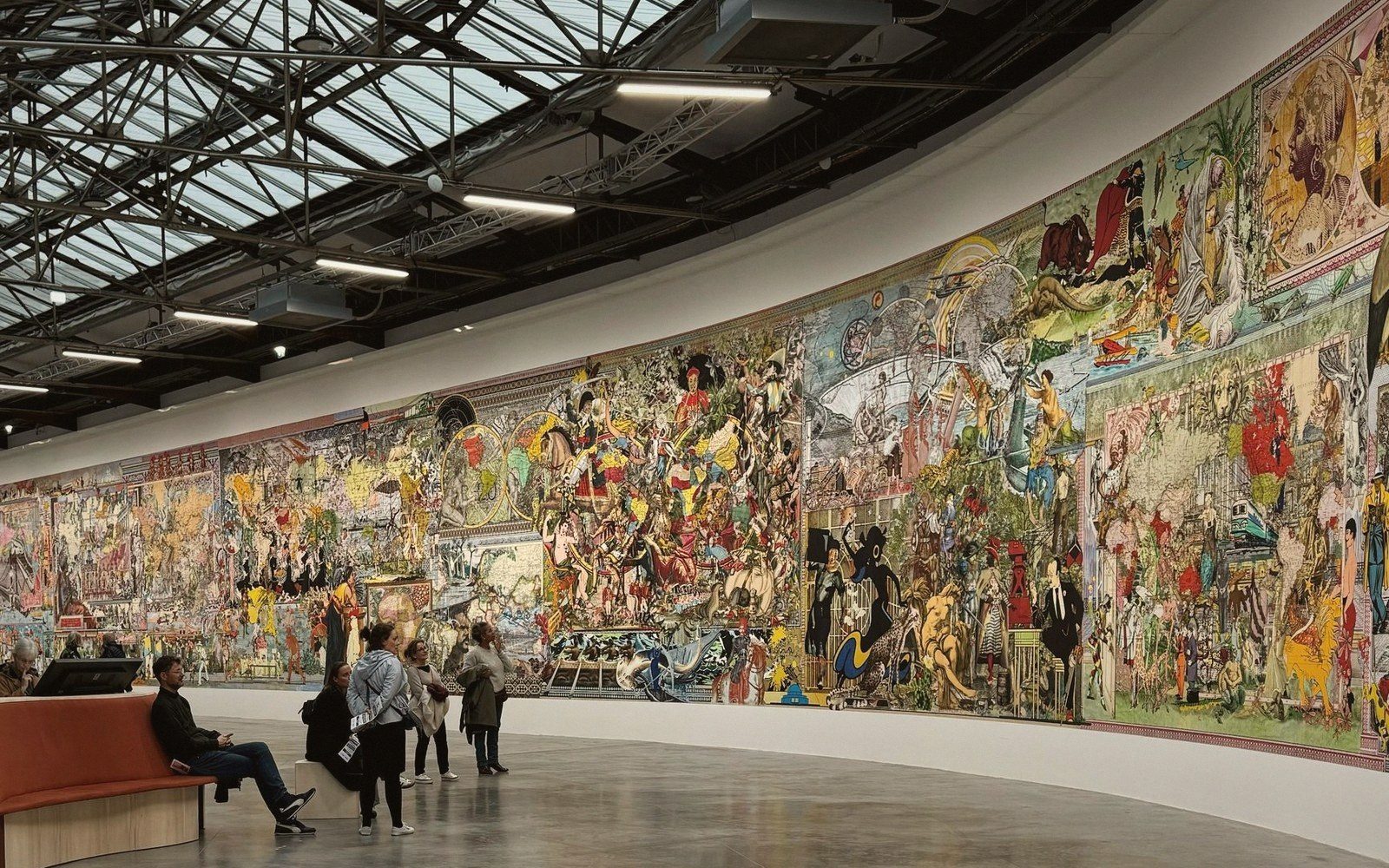
The painting is not bigger — you are smaller
Reproduction flattens everything to the same size. You arrive in the room having seen the image on a screen, in a catalogue, on a postcard rack, and the painting is already familiar — except that it isn't. At roughly two metres tall, a canvas stops being something you look at and becomes something you stand inside. That shift is not metaphorical. It is physiological.
What the body registers
A large painting enters peripheral vision before it enters focus. Your eye has not yet settled on a detail and your brain is already receiving information — light values, dominant colour fields, the overall rhythm of the composition. This is the opposite of how you read a small work, which you approach and then decode. With a large canvas, decoding has already begun before you have chosen to begin it.
This is why position matters more than people realise. Standing too close collapses the composition into a series of surfaces — you see paint, impasto, ground. Standing too far away recovers the image but loses the physical pressure the scale was made to exert. The right distance — and it is different for every painting — is the one at which both things are true at once: you feel the scale and you read the image. Finding it takes a few deliberate steps forward and back, and most visitors never take them.
A related trap: the instinct to photograph. Raising a phone immediately miniaturises the work, frames it as an image-of-an-image, and returns you to the reproductive condition you came to escape. The camera is not seeing the painting. It is documenting that you were in the room.
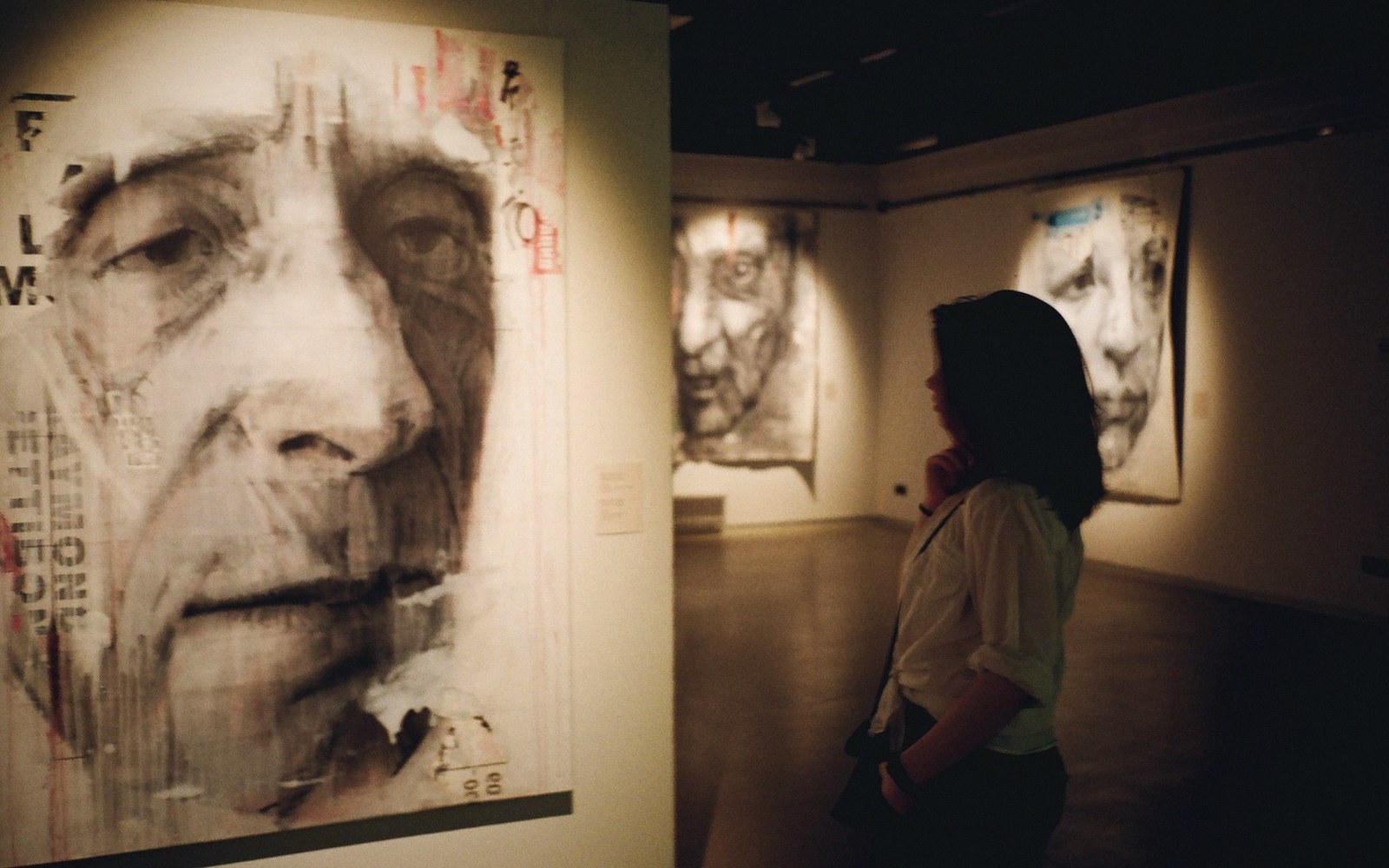
What the painter knew
Painters working at large scale understood all this. A canvas that fills your visual field places you rather than simply pleasing you. The baroque ceiling painters — Pietro da Cortona, Luca Giordano — engineered this as pure theatre, calculating sight-lines from specific positions on the floor below. The Vienna collections are full of altarpieces and history paintings whose scale was never decorative; it was rhetorical. Size was an argument about the importance of the subject, and the argument only works on the body that is present.
Reproductions are useful. They let you prepare, compare, remember. But they are not evidence of what the experience is. A painting you know from a screen and a painting you stand in front of are not the same object. The second one has weight, atmosphere, authority — and a specific distance at which it becomes what it was always meant to be. That distance is yours to find, and nobody can find it for you in advance.