Joseph II Commissioned Beautiful Models of Human Suffering
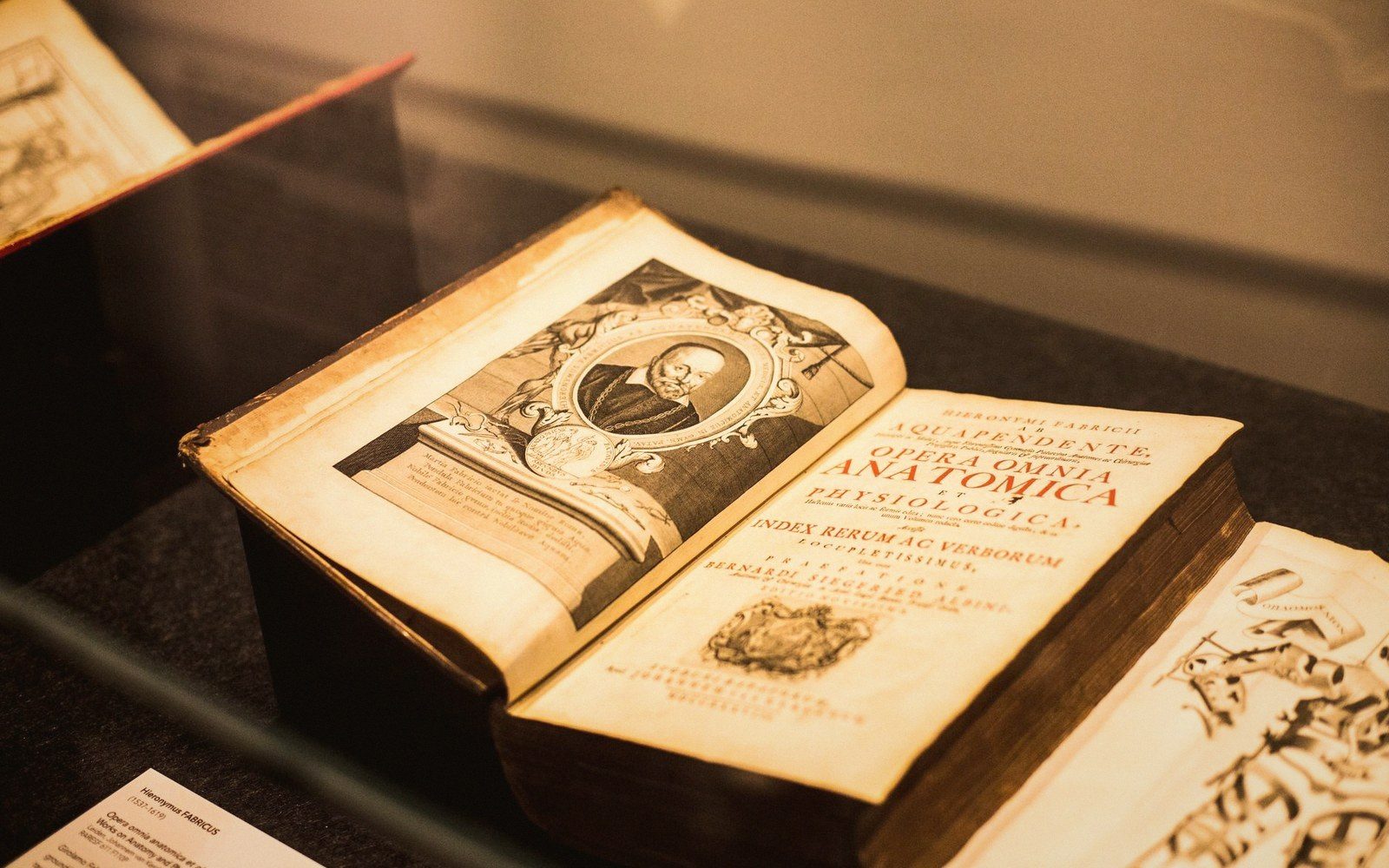
The anatomical wax collection of the Josephinum sits at the exact point where Enlightenment rationalism and Baroque sensuality became the same project
Why Wax, Why Florence, Why Now
In 1785, the Habsburg emperor Joseph II founded a medical academy in Vienna for the training of military surgeons. He called it the Medizinisch-chirurgische Josephs-Akademie — the Josephinum — and he intended it to produce practitioners who could work quickly under field conditions, without the luxury of consulting books or waiting for a cadaver. Anatomy was the core curriculum, and anatomy required bodies.
Bodies, however, were scarce, expensive to preserve, and ethically fraught. Joseph's solution was characteristically Enlightenment in its logic: commission perfect substitutes. He turned to Florence, where the workshop tradition of anatomical wax modelling had reached a level of technical refinement that nowhere else in Europe could match. The Grand Ducal workshop under Felice Fontana, director of the natural history museum at La Specola, received the commission. Between 1784 and 1788, a team of Florentine craftsmen — wax workers, anatomists, artists — produced around 1,200 individual figures and preparations. Joseph had them transported to Vienna across the Alps, packed in specially made wooden cases lined with silk. The silk was not precaution against breakage. It was part of the presentation.
What You Are Looking At
The collection fills a sequence of rooms in the Josephinum's original building on the Währinger Straße, displayed in the walnut-and-glass cabinets that Joseph ordered built for them. The cases themselves are eighteenth-century objects: the vitrines were designed to frame the wax as both specimen and spectacle, which is precisely what they do.
The models cover the full architecture of the human body. There are dissected torsos showing the cardiovascular system in extraordinary detail, the vessels rendered in coloured wax — red for arterial, cream for structural tissue, the textures differentiated with a patience that resembles nothing so much as the rendering of fabric in contemporary Baroque painting. There are cross-sections of the brain, the inner ear, the gravid uterus at different stages of pregnancy. There are full reclining figures — mostly female — in states of partial dissection, their organs displayed as if opened gently, their expressions serene, their hair real human hair laid across silk cushions. These figures in particular stop visitors in a way that purely technical specimens do not. They are undeniably beautiful. They are also undeniably strange.
The strangeness is the point, and it is not accidental. The Florentine tradition of anatomical wax — la ceroplastica anatomica — drew directly on the same aesthetic vocabulary as religious and devotional wax sculpture. The faces of the reclining figures echo painted Madonnas; the poses recall the dead Christ. This was not mere convention. It was a calculated argument: that the interior of the body, revealed to scientific scrutiny, was as worthy of contemplation as any sacred image. Enlightenment rationalism did not reject the emotional charge of Baroque devotion — in these objects, it borrowed it wholesale.
What Joseph Thought He Was Doing
Joseph II was a reformer in the precise eighteenth-century sense: systematic, convinced that human suffering could be reduced through the correct application of reason, and impatient with sentiment. His medical reforms were of a piece with his abolition of serfdom, his Edict of Toleration, his dissolution of monasteries whose resources he redirected into hospitals. The Josephinum was an instrument of that program. The wax models were meant to solve a logistical problem — the shortage of dissectable bodies — and to standardise training across the empire.
But objects exceed their commissions. What Joseph ordered as teaching tools became, in their execution, something that complicates any clean account of Enlightenment rationality. The Florentine craftsmen who made these figures were not neutral technicians recording data. They made choices — about pose, about facial expression, about the silk cushions and the real hair — that push the models toward something closer to memento mori than to illustration. The body displayed here is not purely an object of knowledge. It is also a subject of pity, or wonder, or something the eighteenth century might have called sublime.
The Josephinum's collection is small enough to see in a single visit and strange enough to reward very slow looking. Unlike the great encyclopaedic collections on the Ringstraße, it makes no claim to represent anything beyond itself. What it holds is a moment — around 1785, in a Florentine workshop, in the mind of a reforming emperor — when the scientific and the devotional were not yet quite separate, and beautiful models of human suffering were a reasonable answer to the problem of how to train a surgeon. The wax has not changed. Our difficulty in categorising these objects is itself historical evidence: it tells us how much has shifted in how the West imagines the relationship between the body, knowledge, and art.